HYPOPHOSPHATASIA
In HPP, an inheritied enzyme defect leaves bone unable to mineralize
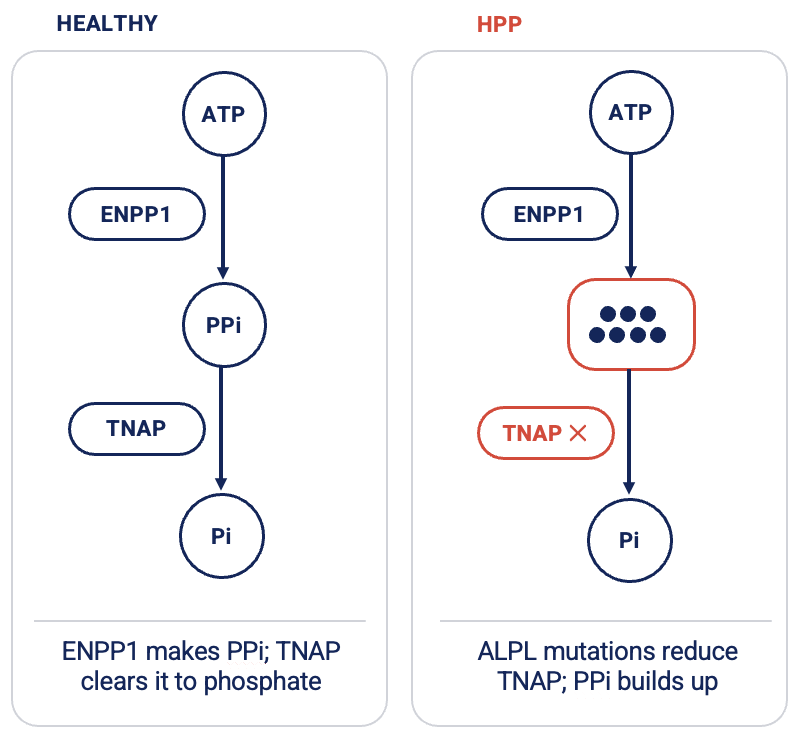
Hypophosphatasia (HPP) is a rare, inherited metabolic bone disease caused by loss-of-function mutations in the ALPL gene, which encodes tissue-nonspecific alkaline phosphatase (TNAP). TNAP deficiency allows inorganic pyrophosphate (PPi), a potent inhibitor of bone mineralization, to accumulate.
Deficient TNAP lets PPi accumulate
How PPi is regulated
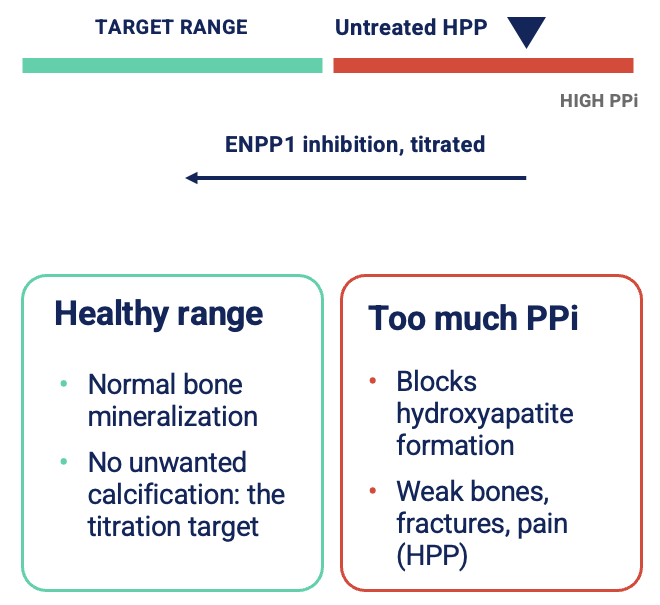
PPi must land in a window
HPP encompasses a spectrum of disease ranging from life-threatening perinatal and infantile forms to adult-onset disease characterized by fractures, chronic pain, muscle weakness, impaired mobility, and other serious complications throughout life. The only U.S.-approved therapy for HPP is an enzyme replacement therapy (ERT) indicated only for patients with perinatal/infantile or juvenile-onset HPP. It requires subcutaneous injections.
Inhibiting ENPP1 may reduce PPi production at its source
Because ectonucleotide pyrophosphatase/phosphodiesterase 1 (ENPP1) is the principal enzyme that generates extracellular PPi, we believe that inhibiting ENPP1 may reduce PPi production at its source, normalize PPi levels, and improve bone mineralization. We have selected AN2-504661, an oral, boron-based inhibitor of ENPP1, as our development candidate for the treatment of HPP. AN2-504661 has demonstrated the potential for a differentiated profile characterized by potent and selective ENPP1 inhibition, favorable pharmacokinetic properties and oral bioavailability, efficacy in animal models, and an encouraging nonclinical safety profile with low potential for hERG-related cardiac events and other safety liabilities, supporting its potential to be best-in-class.
Preclinical highlights
Potent
Low-nM inhibition of ENPP1
Selective
≥100-fold vs. ENPP3 and other ENPPs
Oral & titratable
High oral bioavailability across species; PK/PD-driven dosing
Early safety data
No hERG liability; strong AUC margins; non-genotoxic

