POLYCYTHEMIA VERA
Oral epetraborole potentially modulates red cell production via a novel MOA

Potential for once-daily oral administration

Data from prior preclinical and clinical studies in non-PV patients indicates potential for consistent, dose-dependent, and reversible hematocrit reductions

Potential for red-cell selectivity, novel MOA, without additional cytotoxicity, pan-myelosuppression, or drug-drug interactions, with flexible titration
Developing a new potential way to control hematocrit in PV
Polycythemia vera (PV) drives overproduction of red blood cells, raising hematocrit and the risk of thrombosis, cardiovascular events, and disease progression.
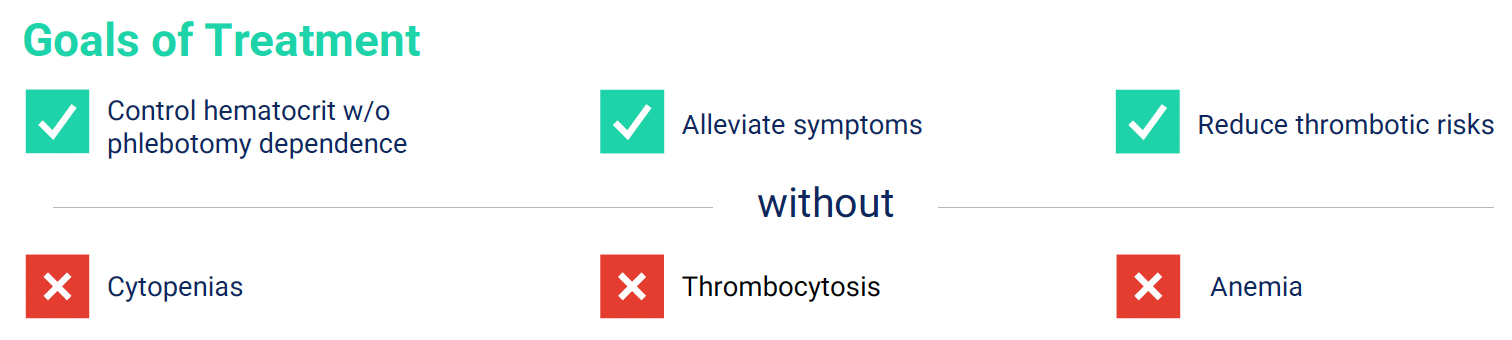
Epetraborole is designed to work through a different pathway than existing therapies. It selectively modulates red cell production at the source — without broadly suppressing white cells, platelets, or other hematologic lineages. This erythroid selectivity is the core of its differentiation: potential for targeted hematocrit control, not generalized cytoreduction.
Prior clinical data in non-PV patients indicates the potential for dose-dependent, reversible hematocrit reductions beginning within weeks of treatment, with white cell and platelet counts remaining stable and within normal ranges throughout.